The Ripple Effect: How HHS's Proposed Policy Change Could Reshape Healthcare and Beyond
AI-generated based on this event

TL;DR
Robert F. Kennedy Jr.'s proposal to eliminate public participation in HHS decision-making could streamline processes but risks undermining transparency and trust, impacting healthcare companies and sparking legal challenges.
Introduction
In a bold move, Robert F. Kennedy Jr., the U.S. Secretary of Health and Human Services, has proposed a policy change that could significantly alter the landscape of public participation in health policy-making. This analysis explores the potential impacts on businesses, legal ramifications, and what investors should watch for as the situation unfolds.
Background
The proposed policy change aims to eliminate public input in decision-making processes within the Department of Health and Human Services, a practice in place since 1971. The rationale is to enhance efficiency by removing procedural burdens. However, this has sparked criticism for potentially undermining transparency and accountability, with legal challenges and congressional scrutiny likely to follow.
Scenarios Analysis
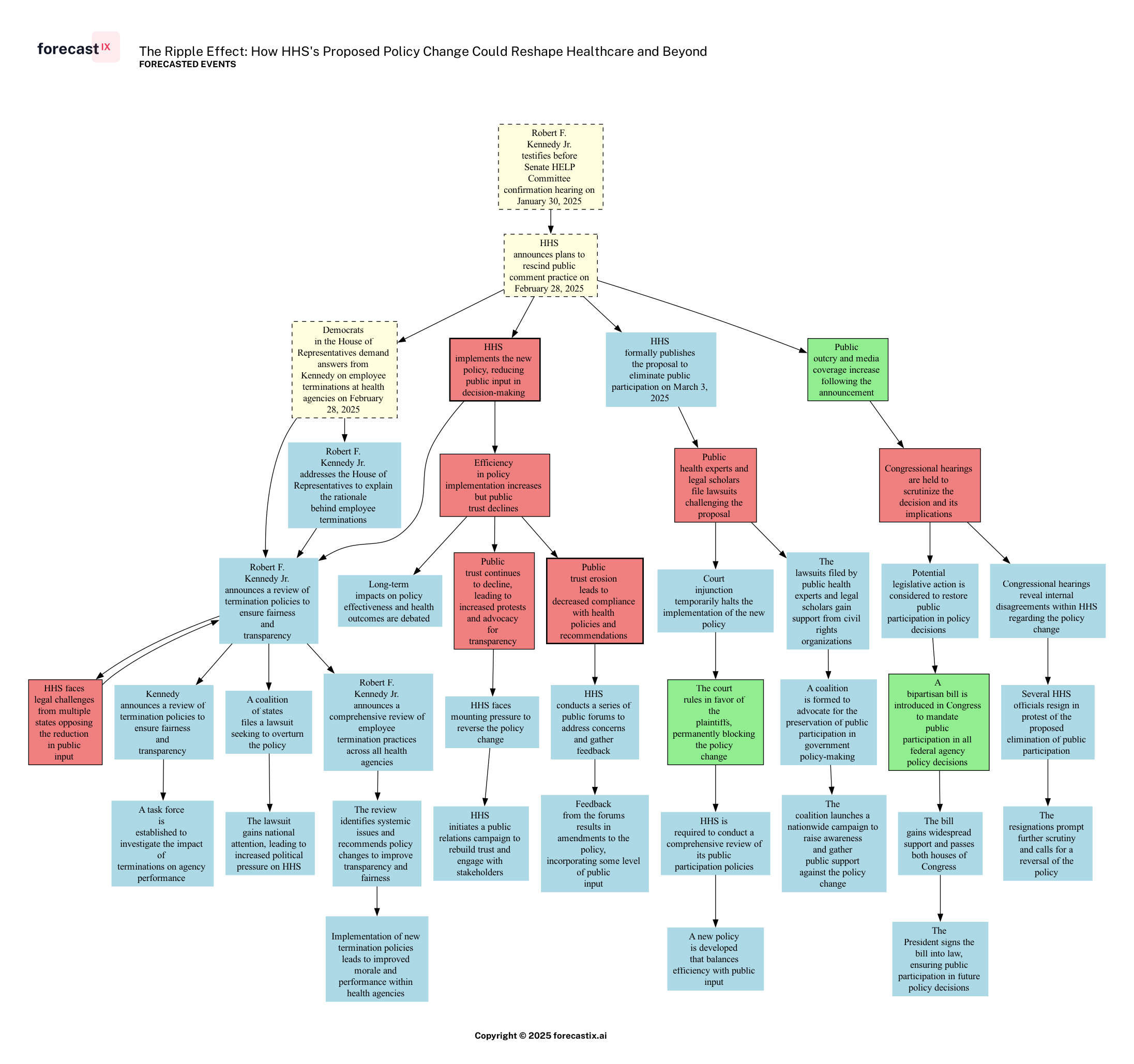 Forecasted chain of events following the Root Events from the base article (yellow). AI-generated.
In the unfolding drama surrounding Robert F. Kennedy Jr.'s proposal to eliminate public participation in decision-making processes within the Department of Health and Human Services (HHS), several intriguing scenarios emerge. The initial announcement of the policy change has sparked a ripple effect, leading to a cascade of reactions and potential outcomes that highlight the tension between efficiency and transparency.
One particularly compelling scenario is the immediate backlash from public health experts and legal scholars, who have filed lawsuits challenging the proposal. This legal action not only underscores the contentious nature of the policy but also sets the stage for a potential court injunction that could temporarily halt its implementation. The legal battles could become a focal point, drawing national attention and increasing political pressure on HHS. The involvement of civil rights organizations in supporting these lawsuits suggests a broader coalition forming to advocate for the preservation of public participation in government policy-making.
Simultaneously, the public outcry and media coverage following the announcement have led to congressional hearings aimed at scrutinizing the decision and its implications. This legislative interest could pave the way for potential legislative action to restore public participation in policy decisions. The introduction of a bipartisan bill mandating public participation in all federal agency policy decisions could gain widespread support, reflecting a significant pushback against the consolidation of executive power.
Another intriguing development is the internal discord within HHS, as revealed by congressional hearings. This internal strife has resulted in several resignations, further complicating the department's efforts to implement the new policy. Such resignations not only highlight the ethical and professional dilemmas faced by HHS officials but also amplify calls for a reversal of the policy.
Moreover, the erosion of public trust, a critical consequence of the policy change, could lead to decreased compliance with health policies and recommendations. In response, HHS might be compelled to conduct public forums to address concerns and gather feedback. This feedback could result in amendments to the policy, incorporating some level of public input, thereby attempting to strike a balance between efficiency and public engagement.
These scenarios illustrate the complex interplay of legal, political, and social forces at work in the aftermath of the proposed policy change. As the situation evolves, the outcomes will likely hinge on the ability of stakeholders to navigate these challenges and find a path that reconciles the need for efficient governance with the democratic principles of transparency and accountability.
Impact Analysis
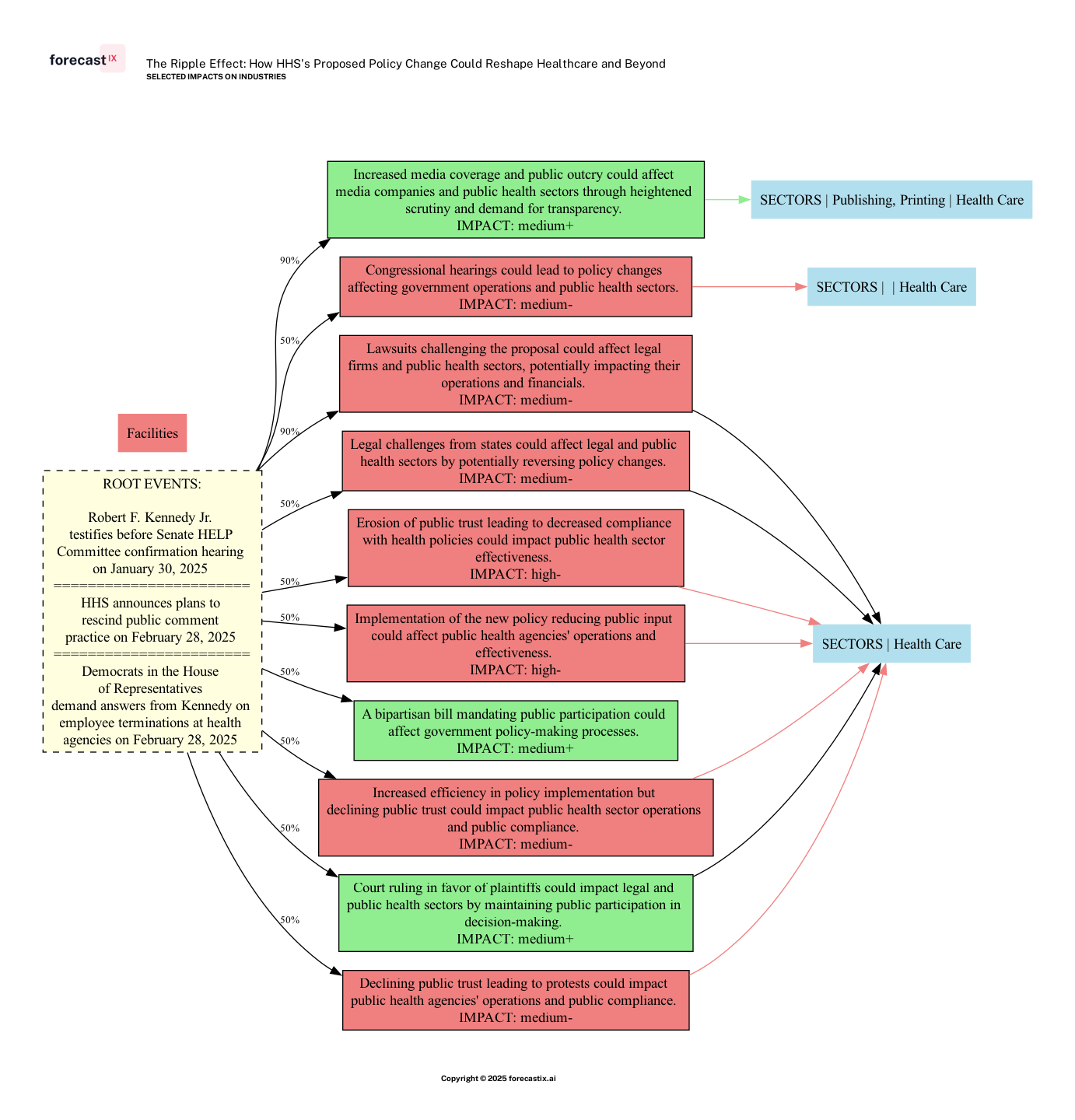 Selected forecasted impacts on industries. Note various likelihood, strength, and direction. AI-generated.
The proposed policy change by Robert F. Kennedy Jr. to curtail public participation in decision-making processes within the Department of Health and Human Services is poised to send ripples across the healthcare sector, particularly affecting companies like DaVita Inc. (DVA), Tenet Healthcare (THC), HCA Healthcare (HCA), Community Health Systems (CYH), and Universal Health Services (UHS). These companies, operating within the Health Care: Medical Facilities sector, could face significant operational challenges if the policy is implemented. The reduction in public input is anticipated to impact the effectiveness of public health agencies, potentially leading to a decline in public trust and compliance with health policies. This erosion of trust could, in turn, result in decreased compliance with health directives, posing a high-impact threat to the sector's effectiveness.
Moreover, the legal landscape may become turbulent as lawsuits challenging the proposal could emerge, affecting not only the public health sector but also legal firms engaged in these disputes. The potential for court rulings in favor of maintaining public participation underscores the delicate balance between efficiency and transparency. Should the courts side with plaintiffs, it could reinforce public involvement in health policy-making, thereby maintaining a check on executive power and ensuring continued accountability.
Simultaneously, the media sector, including companies like News Corp (NWSA), might experience heightened scrutiny and demand for transparency, as increased media coverage and public outcry draw attention to the implications of the policy change. This could lead to a positive impact on media companies, as public interest in the issue grows, potentially increasing viewership and readership.
In summary, while the proposed policy aims to streamline decision-making processes, the potential consequences on public trust and sector operations cannot be overlooked. The healthcare sector, particularly medical facilities, stands at a crossroads where efficiency gains must be weighed against the foundational principles of transparency and public engagement.
Investor Takeaways
- Monitor Legal Developments: Investors should closely follow the legal proceedings and potential court injunctions related to the proposed policy change. Legal outcomes could significantly impact the healthcare sector's regulatory environment and operational strategies.
- Assess Public Trust Implications: Companies in the healthcare sector should evaluate the potential erosion of public trust and its effects on compliance with health policies. Investors may want to consider the resilience of their portfolios to shifts in public sentiment and regulatory changes.
- Explore Media Opportunities: The increased media attention surrounding the policy change presents opportunities for media companies. Investors might consider exploring positions in media stocks that could benefit from heightened public interest and demand for transparency.
Conclusions
The proposed policy change by Robert F. Kennedy Jr. at the Department of Health and Human Services represents a pivotal moment for the healthcare sector and beyond. The chain of events triggered by this proposal underscores the delicate balance between efficiency and transparency in governance. As legal battles unfold and congressional scrutiny intensifies, the outcomes will shape the future of public participation in policy-making.
For investors, the situation presents both risks and opportunities. The potential for legal reversals and legislative interventions could restore public engagement, reinforcing democratic principles. Meanwhile, the healthcare sector must navigate the challenges posed by reduced public trust and compliance.
Looking forward, the importance of transparency and accountability in policy-making remains paramount. As stakeholders strive to reconcile efficiency with democratic values, the unfolding developments will serve as a reminder of the intricate dynamics at play in shaping public policy. In this evolving landscape, investors must remain vigilant, adaptable, and informed to seize opportunities and mitigate risks.
In the words of Robert F. Kennedy Jr., 'Progress is a nice word. But change is its motivator. And change has its enemies.' The unfolding scenario is a testament to the transformative power of policy changes and the resilience required to navigate them.